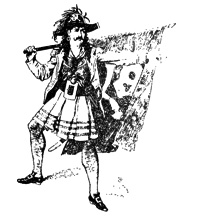
“Oh! a private buffoon is a light-hearted loon, If you listen to popular rumour. From the morn to the night, he’s so joyous and bright, And he bubbles with wit and good humour!”
The Yeomen of the Guard
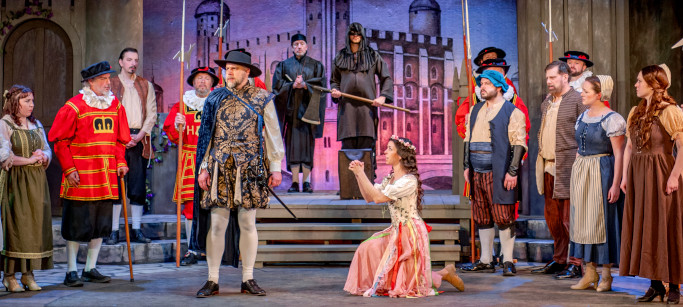
The Yeoman of the Guard
March 6 to 29, 2025
The Yeomen of the Guard Program
Directors
Stage Director: Gary Briggle
Music Director: Dr. Randal A. Buikema
Director’s Notes
Greetings, friends of the GSVLOC!
Thank you very much for attending our production of Gilbert and Sullivan’s most consistently serious and quite grandly operatic work, The Yeomen of the Guard. It has been a great privilege to direct this production, and the fulfillment of a professional and personal aspiration, which I will elucidate further in this Note. Suffice to say, I share the high opinion of this piece held by both the librettist and the composer – Gilbert regarded it as “the best thing we have done,” and Sullivan often said that it was his favorite opera.
After the relative failure of Ruddigore, which ended its mediocre run at the Savoy Theatre in November 1887, the morale of Gilbert, Sullivan and their business partner Richard D’Oyly Carte was at a very low ebb. Gilbert was past 50 and experienced enough to realize that without Sullivan’s music, his potential was much reduced. Sullivan, at 45, was at an age when many men are asking serious questions about the course of their life and career. In Sullivan’s case, the impetus for doing so was especially great. Many members of the musical establishment felt that by composing for the popular musical theatre he was wasting his undeniable talents and his extensive education. The knighthood that had come to him in 1883 doubtless encouraged him to strive higher. But due to the triumvirate’s tumultuous relationship, there was no new opera on the horizon, so H.M.S Pinafore had to be revived as a stop-gap measure.
Gilbert may have been inspired by a poster advertising the Tower Furnishing Company, which featured a yeoman (“Beefeater”) against a background of the Tower of London. He initially thought of writing a burlesque on the subject, but decided instead “to make it a romantic and dramatic piece, and put it back into Elizabethan times.” Gilbert’s decision to set his new opera in the halcyon days of Tudor England was no doubt partially influenced by the wave of patriotism and nostalgia which swept Britain in the wake of Queen Victoria’s Golden Jubilee.
He reassured Sullivan that the story was dramatically affecting, “without anachronisms or pathos of any kind” and when Sullivan read the plot (entitled “The Tower of London”) he was immensely pleased with it. Gilbert had kept his promise: “Pretty story, no topsy-turvydom, very human and funny also.” It must be noted that Gilbert was feverishly uncertain of his departure from the tried-and-true formulas he had previously established. For once, his libretto involved the behavior of real people in well-known surroundings, rather than the antics of comic caricatures in wholly fanciful settings. It follows logically that both cast and audience must have shared to some extent this unsettled state of mind. As the magazine PUNCH reported in the opening night review, “… none of the actors play with conviction. They seem uncertain as to the character of the piece – is it serious, or isn’t it?”
It is our intent in this production to answer that question with confidence, and to present a serious opera filled with intrigue, betrayal and heartbreak – occasional glints of wit and humor notwithstanding – an interpretation guided by my experience in a production directed by John Reed, O.B.E., a definitive “Jack Point” with the D’Oy’ly Carte Opera Company, 1959 -’79. (See Footnote, below)
The opera, the eleventh of fourteen that the famous duo created, was composed and completed in a great rush. Sullivan wrote the overture in the auditorium during the final rehearsal and tossed the parts to the players in the orchestra as he completed them. Tempers frequently flared between composer and librettist, but the First Night, on October 3, 1888, was an unqualified success.
The Yeomen of the Guard ran for 423 performances, a total exceeded only by H.M.S. Pinafore, The Mikado and The Gondoliers, ending its initial season on November 30, 1889. It was revived in 1897 and was subsequently seldom out of the D’Oyly Carte repertoire. There is every reason to suppose that this magnificent opera will continue to touch audience’s hearts for as long as the Tower itself continues to keep its silent watch and ward over London towne.
Footnote:
In the summer of 1991, I had an unforgettable experience, one of the highlights of my career in the Theatre: I was directed in a production of The Yeomen of the Guard by John Reed, who had inspired me as a singer-actor since I first listened to him on vinyl in seventh grade. The producer of Seaside Music Theatre in Daytona Beach Florida, Tippen Davidson, a true Savoyard, engaged John as authoritative stage director – who, since his departure from the D’Oyly Carte company, had been directing and performing in America with increasing frequency and satisfaction. I was cast as Jack Point, a “dream role”, and upon meeting John, humbly requested that he set his performance on me, in the manner of a choreographer who gives a dancer every nuance and detail of their interpretation, thereby passing down traditions as well as insights to the next generation of performers. It was a tremendously rich and rewarding experience, one which I have long-hoped I could “pay forward” – and directing this production is the fulfillment of that wish. This version of The Yeomen of the Guard is thoroughly informed by John Reed’s deep understanding of the opera, “Jack Point” having been his favorite role in the canon, and that characterization is a particular tribute to John’s “melancholy jester”.
On opening night, he came to my dressing room moments before the overture and pressed a British penny into my hand … with the whispered instruction that I should use it in the “coin toss” during the Act One finale. I treasure that coin, and all I learned from John – and that clever “bit of business” will be included in this production, in grateful homage to him. I feel his winking spirit hovering at my side every time I am privileged to direct an opera by the incomparable Gilbert and Sullivan.
I sincerely hope that your heart is touched by this bittersweet production.
p.s. If you would like to make the acquaintance of John Reed, I highly recommend his delightful memoirs, “Nothing Whatever to Grumble At”, available from Xlibris – filled with fascinating, oft hilarious anecdotes. You will also find his very kind compliments regarding my performance (as “Gary Biggles”, sic), by which I feel supremely honored.
Gary Briggle,
With acknowledgements to “The Annotated Gilbert and Sullivan” by Ian Bradley
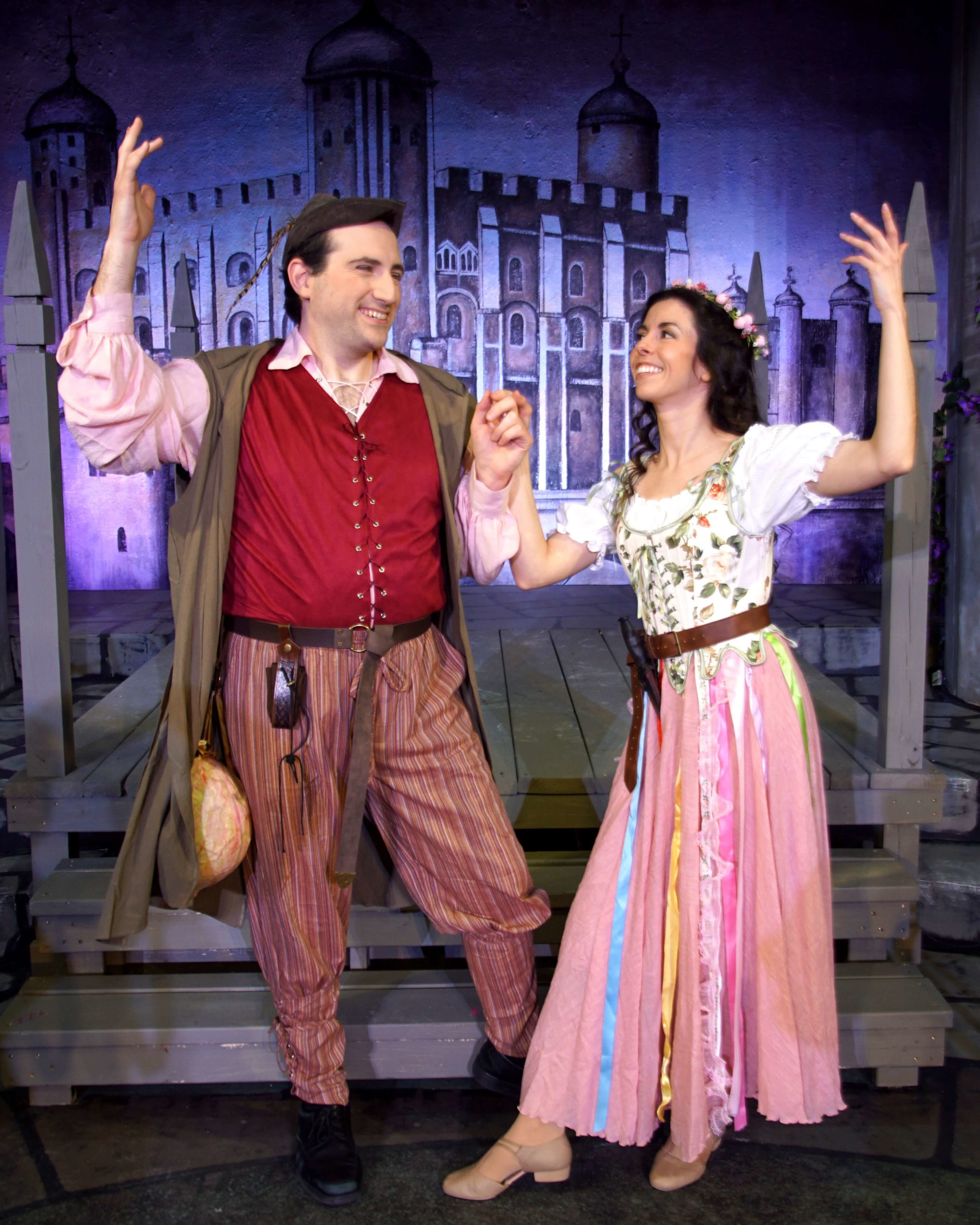
Sam Vinitsky as Jack Point and Mary Kettlewell as Elsie Maynard
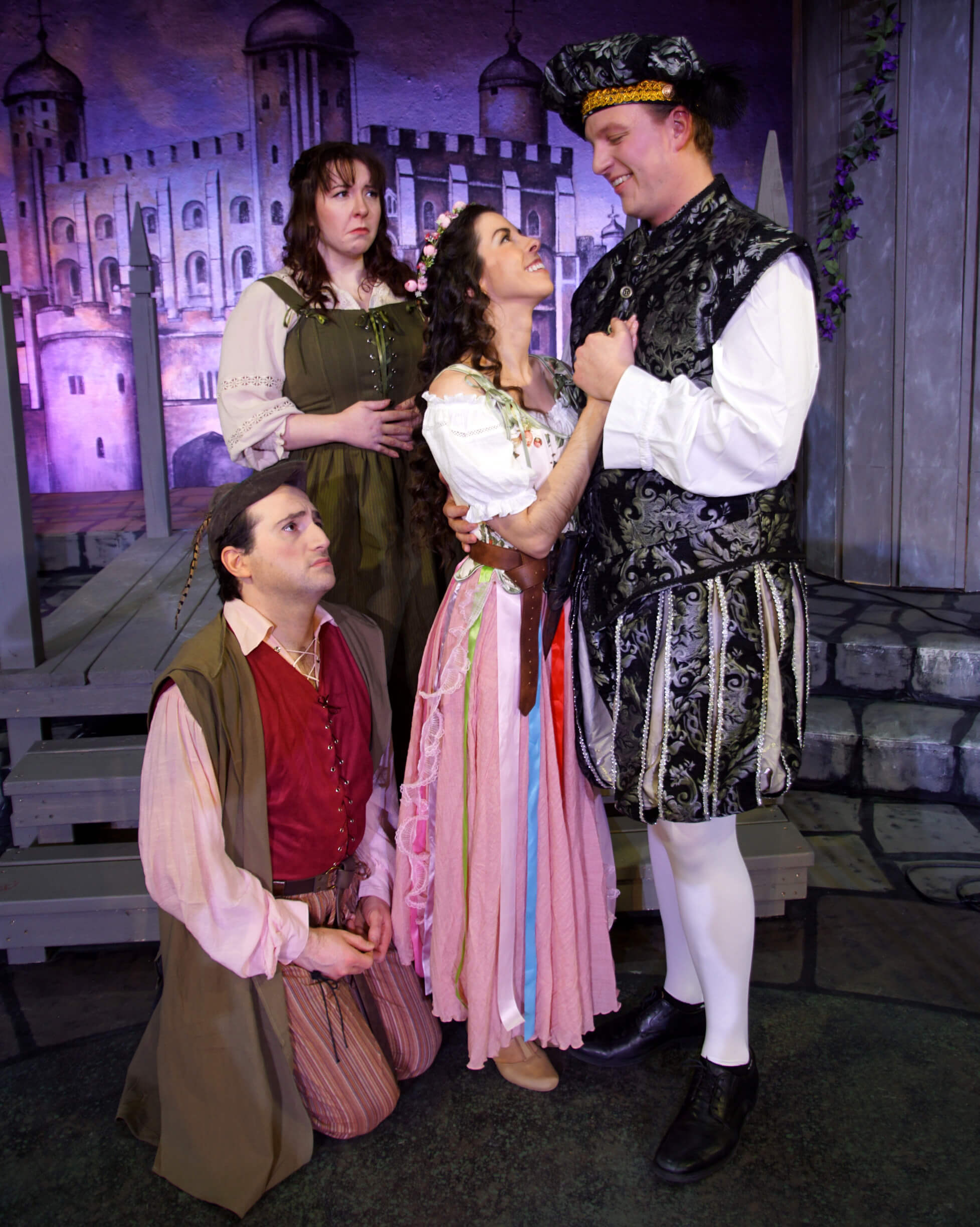
Sam Vinitsky as Jack Point, Charlotte Smith as Phoebe Meryll, Mary Kettlewell as Elsie Maynard, and Graham Remple as Colonel Fairfax
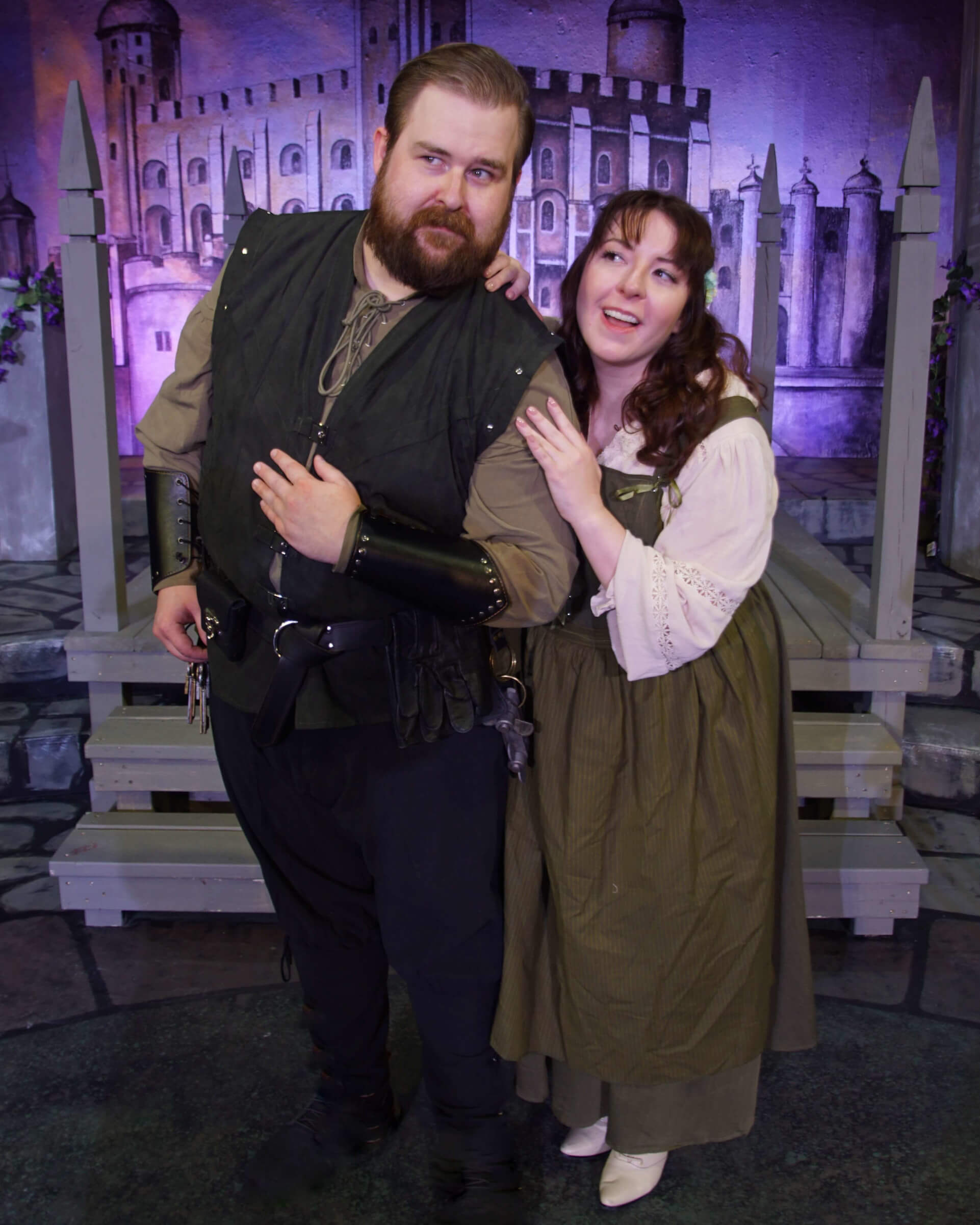
Charlotte Smith as Phoebe Meryll and Trevor Woggon as Wilfred Shadbolt
The Yeomen of the Guard Reviews
Cherry and Spoon, by Jill Schafer
Play Off the Page, by Mary Aalgaard
Single White Fringe Geek, by Matthew Everett
Two excellent internet resources for information about The Yeomen of the Guard

Show Poster
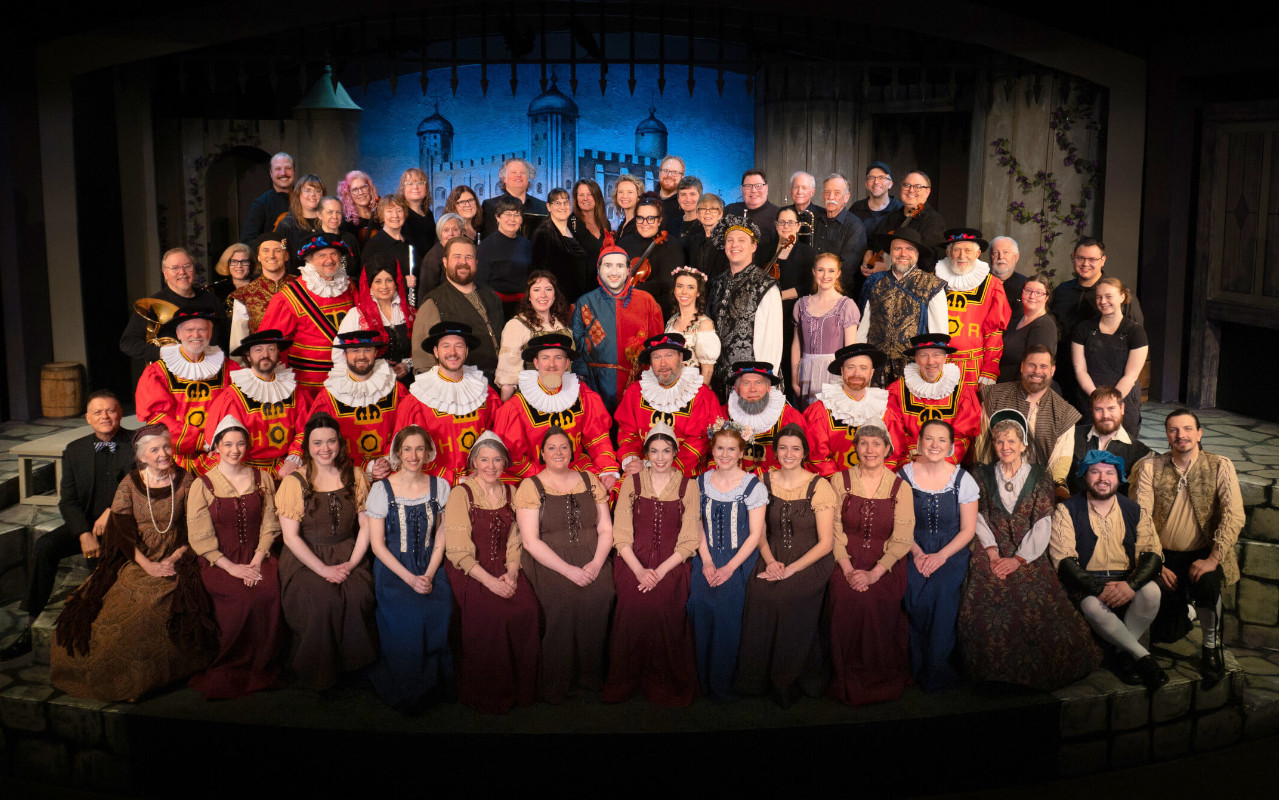
Company Photo
“Strange adventure! Maiden wedded To a groom She’s never seen Never, never, never seen! Groom about to be beheaded, In an hour on Tower Green! Tower, Tower, Tower Green!”
Sergeant Meryll, Kate, The Yeoman of the Guard